Test Innovators’ education team is excited to announce the release of our new 2018 ISEE and SSAT practice tests!
We at Test Innovators are committed to providing the most accurate ISEE and SSAT preparation materials available. To this end, we update our tests throughout the year to ensure their accuracy based on feedback about the official tests. In addition, every year we release entirely new, updated practice tests. Students taking these tests will encounter new content in the form of new passages, new vocabulary, new sentence completions and analogies, and new math questions.
In addition to this brand new content, we re-balance our existing test content based on extensive data from the past year, which ensures that each test is of the same difficulty. These updates are designed to create practice tests that match the difficulty, content, and style of the official tests so that students will go into test day confident and prepared to succeed. Log into your existing account to check out our new tests now at ISEEpracticetest.com and SSATpracticetest.com.
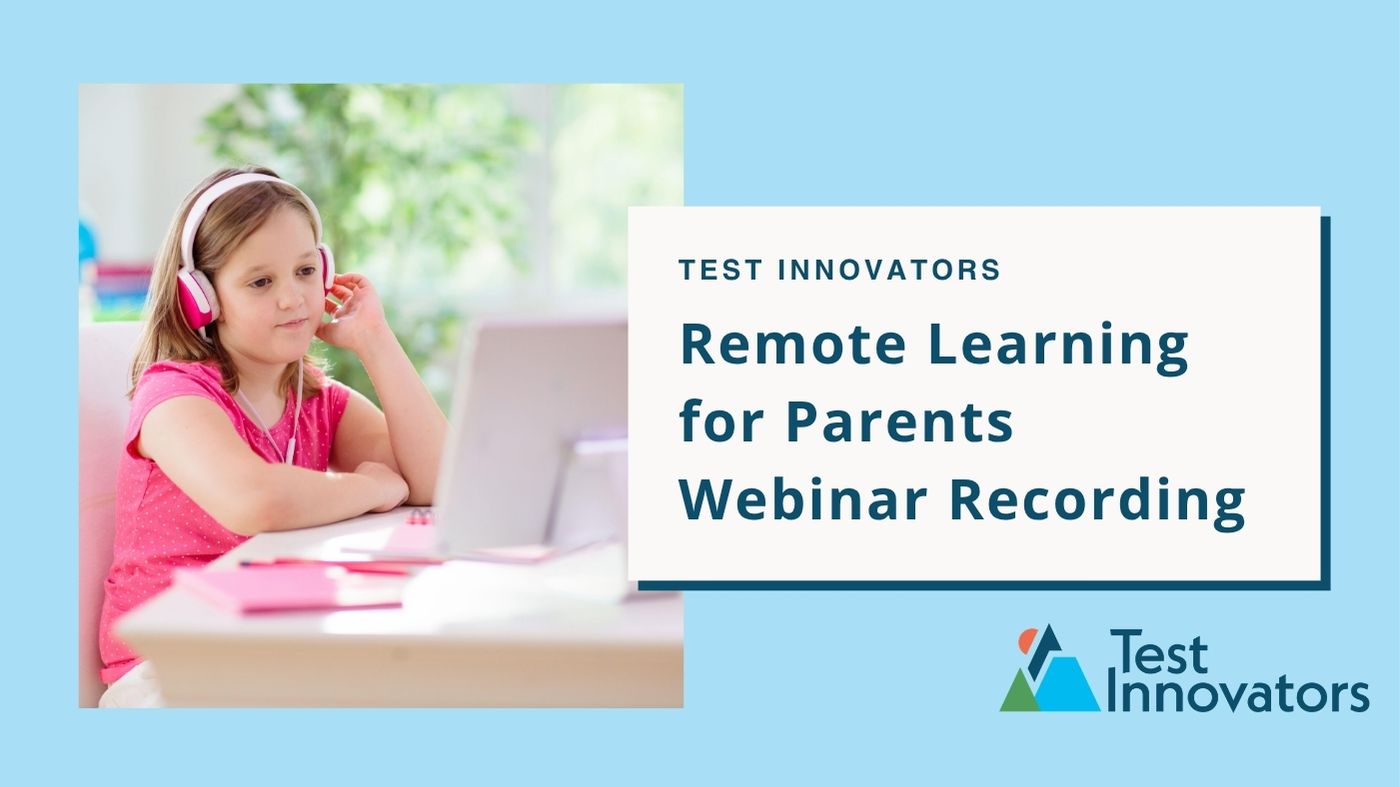
Are your kids home from school? Watch the recording our Remote Learning for Parents webinar hosted by Test Innovators' Director of Education, Brenna O'Neill, for a parent-oriented discussion of remote learning. Come away with strategies and ideas for navigating the new world of remote learning that many families are now...
The first thing to know for the Middle or Upper level SSAT is when to guess. You need to understand each question well enough to be able to cross off at least one answer choice. Otherwise, omit the question as there is a ¼ point guessing penalty.
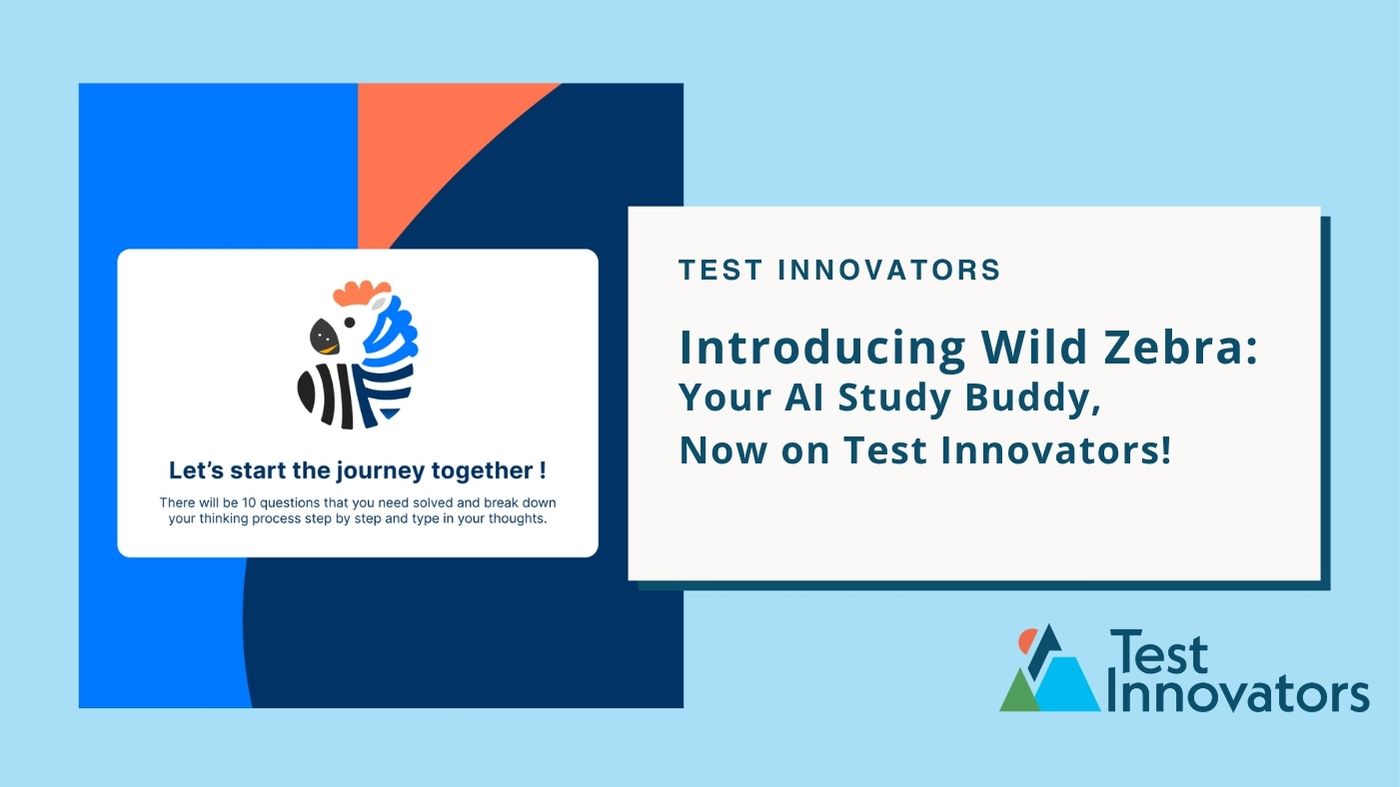
Enhance your learning with Wild Zebra, a customizable AI teacher that is designed to help you improve areas of weakness. Now available with our ISEE practice platform!
The SSAT has three sections: Verbal, Reading, and Quantitative. When we looked at our practice test data from this past year, we noticed that five states—Massachusetts, New Jersey, California, Florida, and Washington—attained the highest scores on these sections, but there were variations between each state's particular strengths.
Decades of research have shown that students are prone to learning loss during the summer months when structured learning may not be an everyday occurrence. Commonly referred to as the summer slide, this learning loss can hinder months of hard-earned math, reading, and writing gains.
You can now take the ISEE at home, making it safe and easy to take this important admissions test. Although the structure and content of the ISEE at home test is the same, the experience of taking the test at home is different from taking the test in person. Understanding...
Test preparation is an iterative process. Each practice test serves as a benchmark of progress and as a roadmap for what to work on next. Approach preparation one step at a time, and don't get discouraged if you aren't reaching your goals immediately or as quickly as you expected. Like...
The Middle Level ISEE is taken by students applying to grades 7 and 8. The test is administered on the computer and on paper. It consists of five sections: Verbal Reasoning, Quantitative Reasoning, Reading Comprehension, Mathematics Achievement, and the Essay.