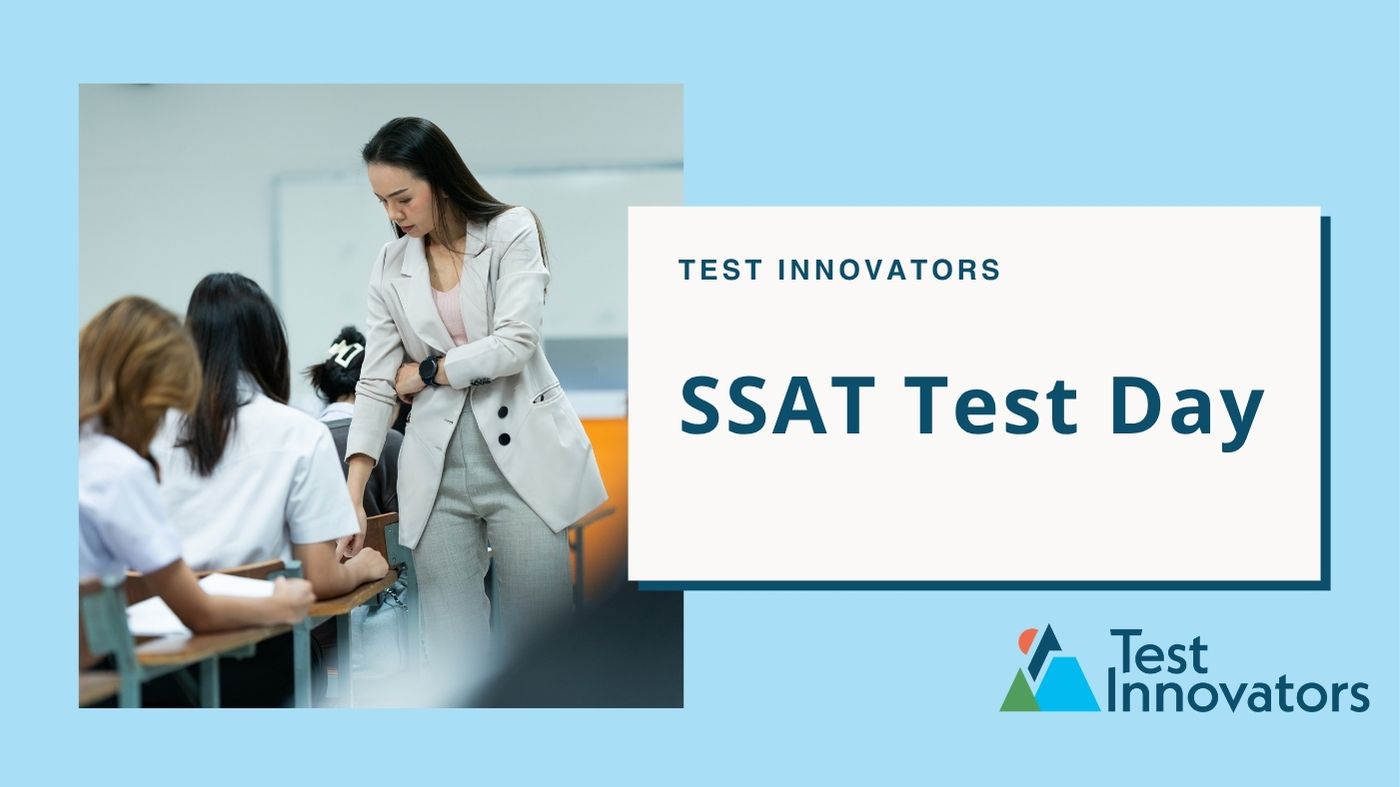
The day before the test, relax, read a book, get some exercise, and get plenty of sleep. In fact, you should prioritize sleep the entire week before the test as those earlier nights’ sleep will be critical.
On the morning of the test, wake up with ample time to eat a good breakfast and to arrive at the test center at least 30 minutes prior to the start of testing.
Do not attempt to study or cram last-minute information on the night before or day of the test! This will only cause undue stress and anxiety. Now is the time to feel confident in everything you’ve already done to prepare.
What to bring to the test:
Admission ticket
A snack
Water
Put your snack and water in a clear ziplock bag with your name on it.
For paper/pencil testing:
Four #2 pencils
Prohibited items:
Calculators
Pens
Backpacks
Cell phones (must be off and cannot be accessed during testing)
Scratch paper (provided at computer testing locations)
Watches (a clock will be visible in the testing room)
This year, some K-12 independent schools have made test scores an optional part of their applications. However, new at-home testing options for two of the most widely-used admissions exams, the ISEE and SSAT, have made testing feasible once again.
One critical aspect of ACT preparation is familiarizing yourself with the test so there are no surprises on test day. Knowing what to expect for each section of the test builds confidence and prevents lost time.
Yesterday Test Innovators' Director of Education Brenna O'Neill revealed the strategies and secrets she and her team of highly experienced tutors have developed over years of preparing students for the SSAT. You can view the recording below:
Due to the recent coronavirus outbreak, The Enrollment Management Association (EMA), makers of the SSAT, is taking preventative steps to ensure the safety of students, test center administrators and proctors, members, and employees. They are closing test centers in impacted areas and requiring a completed Travel Declaration from anyone entering...
Meet Evan
We are excited to introduce Evan, one of our 2021 scholars. Through dedication and hard work, Evan achieved a 98th percentile on the SSAT!
Evan is an avid athlete who has played hockey since kindergarten and more recently picked up tennis. In addition to training for his athletic endeavors, he...
The SAT Essay section is optional, but some schools require it—be sure to check your prospective schools’ application instructions. The team here at Test Innovators wants to ensure you are fully prepared for all parts of the test, including the Essay section.
Just as with any game or sport, knowing the rules of a standardized test is a cornerstone of success. Students who go into a test without any kind of preparation are at a significant disadvantage: they'll be figuring out those rules as the clock ticks. That's why Eastside Catholic School...
Applying to independent schools can be daunting for students, families, and educators alike, and the testing component is no exception. When they begin the admissions process, few students have experience with high-stakes admissions tests. However, with the right preparation—including sufficient practice test opportunities—students can improve their test scores to help...
Whether your test date is months away or next week, you may be wondering how to create a study plan that helps you maximize your time and achieve success on test day. Regardless of where you are in the preparation process, we’ve got you covered with a strategic roadmap that...
The experimental section is the shortest section of the test: only 15 minutes and 16 questions total. Unlike the other SSAT sections, the experimental section has a mix of question types: six verbal, five reading, and five quantitative. While you want to answer every question and try your hardest, don’t...